The key emotional insight driving this project is nostalgia, particularly the feeling associated with the “2016 internet era”, a time defined by: unstructured exploration,
serendipitous discovery of niche communities, and
Curiosity-driven browsing without clear intent.
Problem Definition & Focus
Current browser history systems are built around chronological logs and keyword-based retrieval, which do not align with how humans remember experiences.
Key Gaps Identified
Recall Problem – Users cannot remember when they accessed information
Connection Problem – No visibility into relationships between websites or topics
Narrative Problem – Browsing history lacks structure, meaning, and emotional value
Our focus is to transform browsing history into a narrative-driven, interactive memory system.
Research & Rationale
Our solution is supported by key behavioral and design insights:
Human memory is associative:
People recall experiences through themes and connections, not timestamps
Nostalgia increases engagement:
Revisiting past experiences strengthens emotional connection and retention
Exploratory learning is nonlinear:
Users jump between topics rather than follow structured paths
Information overload reduces usability:
Raw logs are ineffective without organization and visualization
These 4 insights aimed our efforts towards shifting from a traditional log-based system, to a story-based system.
Our Solution
We propose a system that automatically captures, organizes, and presents browsing history as an interactive, visual, and emotionally engaging archive.
Features & Functionality
1. Automatic Web Archiving
Tracks all visited websites seamlessly
Eliminates the need for manual bookmarking
2. Topic Bucketing & Classification
Websites grouped into meaningful topics (e.g., video editing, home repair)
Exhaustive clustering enables users to revisit entire learning journeys
3. Interactive Timeline
Scrollable timeline organized by:
Day
Month
Year
Highlights “chapters” of a user’s life
4. Highlighting & Topic Consolidation
Users can highlight important topics
System consolidates related content into curated collections
5. Nostalgia Prompts
Surfaces past browsing sessions:
“You explored this topic 3 months ago”
Creates continuity between past and present
6. Statistics & Insights
Yearly summaries of:
Interests
Habits
Time spent
Helps users reflect on their digital behaviour
7. Sharing System
Individual webpages
Topic “buckets” (e.g., MCAT resources, tutorials)
Curated collections (e.g., fun websites)
Personal statistics
8. Customization & Control
Users can remove webpages from topics
Ensures privacy and personalization
Visual Design & User Experience
Key Elements
Timeline-first interface emphasizing passage of time
Node-map explorations showing relationships between topics
Clear visual hierarchy for easy navigation
Balances productivity and emotion
Design Process & Iteration
1. Ideation
Reflected on personal experiences with the 2016 internet
Identified nostalgia and exploration as core themes
2. Feasibility Exploration
Built Chrome Extension MVP concepts
Researched URL classification techniques
3. Concept Evolution
Early idea: Node-based map
Refined to: Timeline + topic system
Improved clarity and usability
Wireframing
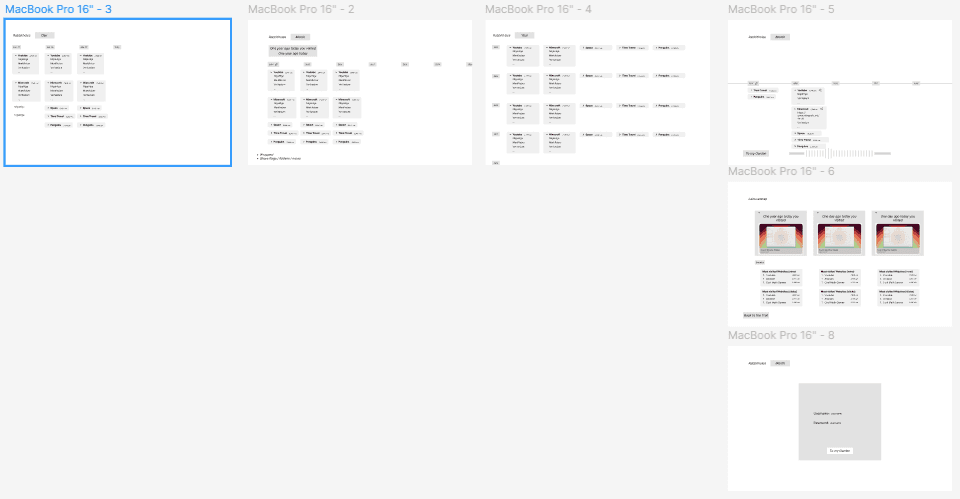
5. High-Fidelity Prototyping
Developed interactive prototypes
Added animations and user flows
Navigation and engagement